
On this episode of “What did Katelyn Find To Post This Month?” I present to you my very first college lab report. I know, you want something a bit more juicy.
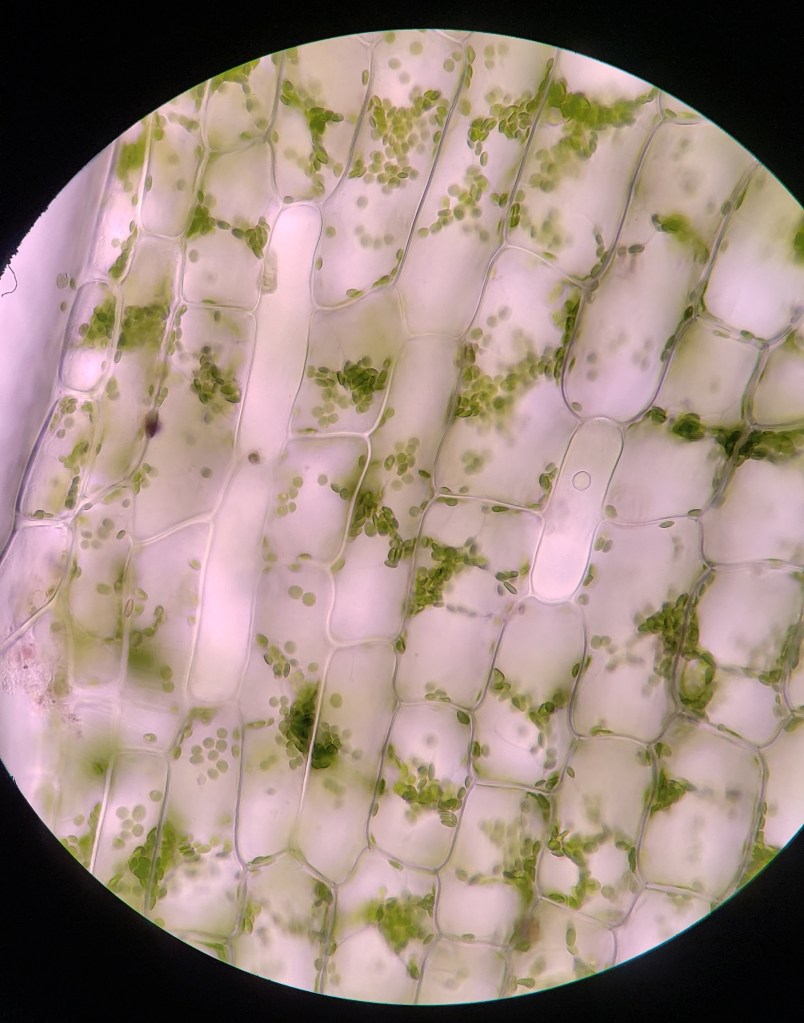
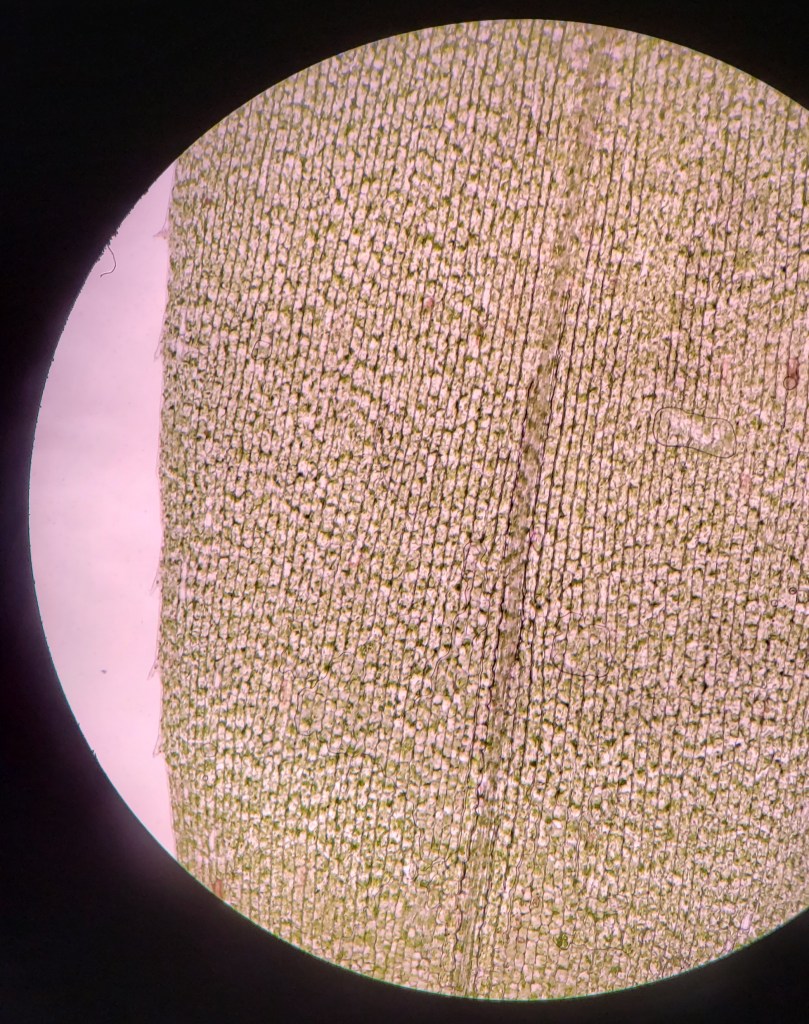
One of the biggest inhibitors to my blog is the fact that I have no time to work on it and write more diary type entries, which is my favorite part about this. With more free time will come more personal posts, and I hope you can stick around for those this summer. More content is underway! In the meantime If you are not into this week’s topic, you at least can enjoy some of the microscopic images I took, woop!
The Effect of Sucrose on Potato Mass
Rateliff, K.
Biology 1440
Dr. Puri, Tuesday PM
Introduction: Selective permeability is vital for cell membranes to transport materials (Urry L.A. et. al. 2020). The cell’s goal of equilibrium is the driving cause for diffusion, which is the movement of molecules from a location of high concentration to a location of low concentration (Karafit et. al. 2020, Urry L.A. et. al. 2020). Specifically, this experiment demonstrates osmosis, or water diffusing across the cell membrane ((Karafit et. al. 2020). Osmosis is influenced by tonicity, the ability of water to move in and out of the cell in response to a surrounding solution (Urry L.A. et. al. 2020).
The purpose of this study is to observe osmosis through the change in mass of potato cores when introduced to various concentrations of sucrose. Potatoes were chosen because of their relative ease to release water. If sucrose solutions affect osmosis in plant cells, and the sucrose concentration in which the potato core is submerged in increases, then the potato cores will decrease in mass as the concentration increases.
Methods: Following the procedures in the lab manual, 30 ml of 0, 0.2, 0.4, 0.6, 0.8, and 1.0 M of diluted stock sucrose solution were put into labeled plastic beakers. An unknown 30 ml of sucrose concentration was also added to a labeled beaker. Next, seven 5 mm thick potato cores were cut, patted dry, and the mass was recorded into a data table. The potatoes were placed in their selected sucrose beaker and incubated for an hour and 15 minutes. After this incubation period, the potatoes were removed and patted dry before being weighed again. The mass was recorded and the percent change in mass was calculated for each core slice. The unknown’s mass change was recorded but not included in the figure and instead, the line of best fit in the figure of the known stock solutions was used to determine the concentration of the unknown solution (Karafit et. al. 2020).
Results: From 0 M to 1.0 M of sucrose concentration, the mass of the potato cores decreased by 171% (n=16 per data point, mean ± SE). There is an overall trend in Figure 1 that as the sucrose solution increases, the mass of the potato decreases. The potato cores in a higher concentration of sucrose solution shrank and floated, while the potato cores in the lower concentration were able to take up more water. With the average change in mass of the potato which incubated in the unknown sucrose solution being 0.0059375 g, it can be concluded that the unknown concentration was close to that of 0.6 M. This supports the claim that the unknown solution is isotonic or having the same concentration of the potato cells (Karafit et. al. 2020).
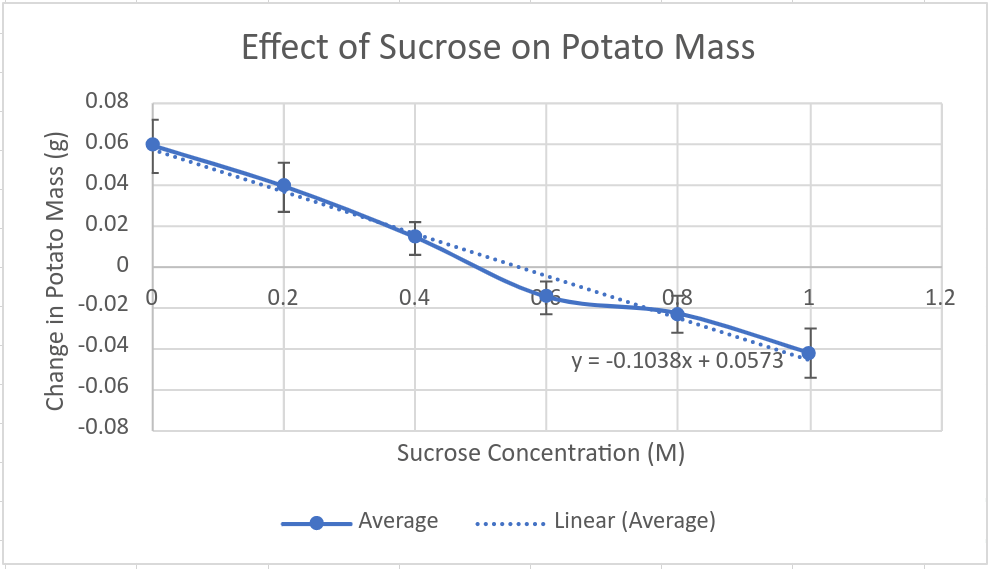
Discussion and Conclusion: The results of the experiment supported the hypothesis that the increase of sucrose solution will cause a decrease in potato core mass. This can be explained by the fact that the sucrose solution does not have a lot of free water, and the higher the concentration, the less free water there is. The average decrease in mass (171%) further confirms the hypothesis. Because of the desire for equilibrium, the water from the potato cores moved out of the potato and into the sucrose solution where there is less free water. This causes the potato core to be hypertonic and shrink. On the other hand, the potatoes in less concentrated sucrose solution, the 0M concentration specifically, experienced a hypotonic reaction in which the cells took up the surrounding water and expanded. The importance of this experiment lies in the cell’s ability to be permeable, and to be able to visualize what happens in both animal and plant cells. New experiments can be conducted with plant cells being introduced to various substances such as saltwater to test the solutions which cause water to exit or enter the cell faster or slower.
Literature Cited:
S.J., Choinski J.S., Jr., Runge, S.W. (2020). BIOL 1440 Laboratory Manual (5th ed.). Plymouth, MI. Hayden-McNeil, LLC.
Urry L.A., Cain M.L., Wasserman S.A. and Minorsky P.V. (2020) Campbell Biology In Focus (3rd ed.) San Francisco, CA. Pearson Benjamin Cummings.


Very scientific! Love all your posts.
LikeLiked by 1 person