
The Thermoregulation of Different Snake Structures
Rateliff, K.
Biology 1441
Dr. Gifford, Tuesday AM
Introduction: In the extreme heat of the desert, all organisms that reside there must be equipped with the correct anatomy to thermoregulate efficiently. Thermoregulation is a mode of achieving homeostasis, or a maintained and constant body temperature (Kariff 2022). Desert Snakes are ectothermic, they don’t regulate their temperature using their bodies. Instead, ectotherms use outside heat sources to thermoregulate. In the dead of Summer, desert snakes need to burrow and cool off as quicky as possible to regain homeostasis.
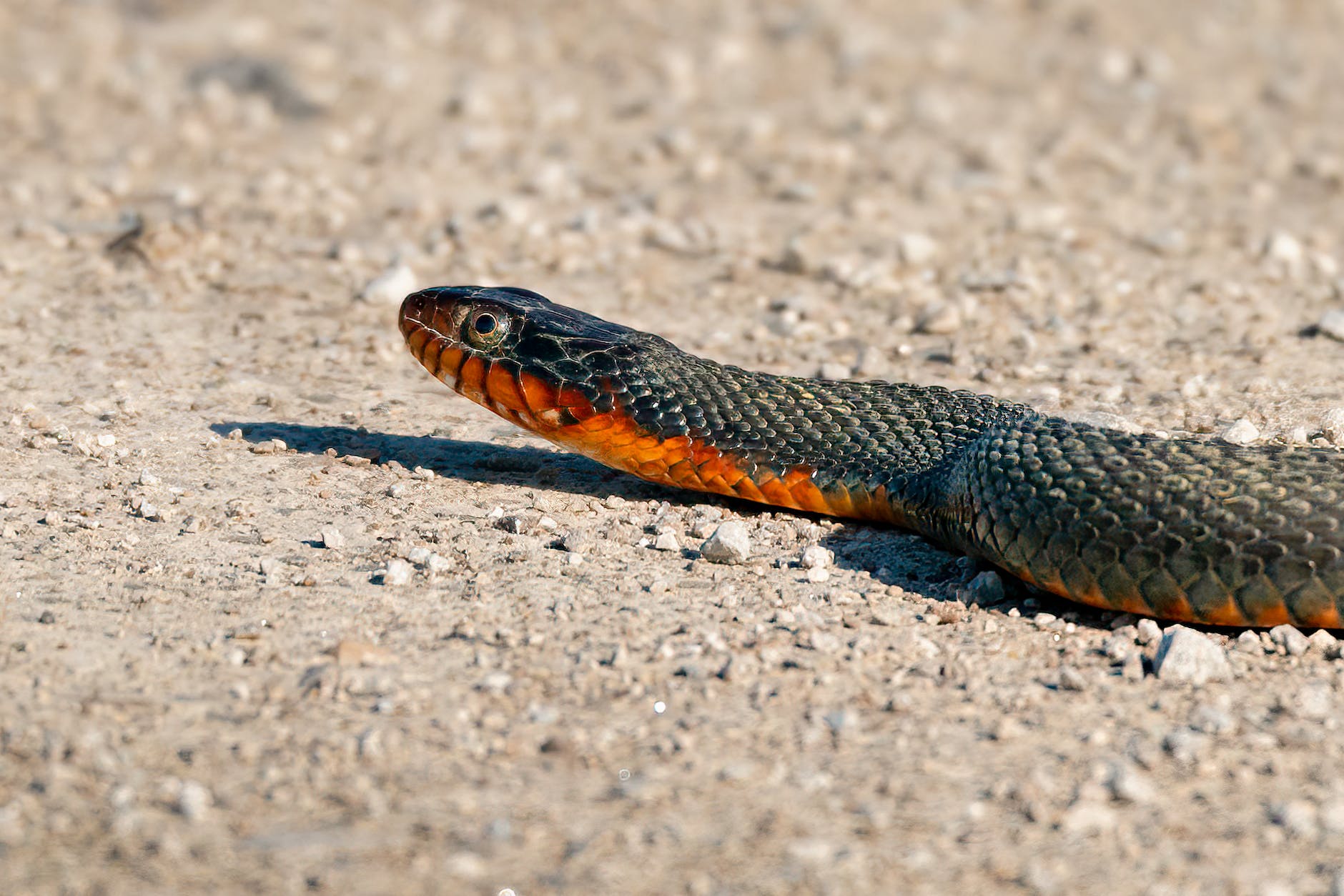
The purpose of this study is to determine the ideal shape of a desert snake based off the rate of cooling between a round tube and a flat tube. This will demonstrate the importance of structure on thermoregulation in organisms (Giacometti et. al. 2021). Desert snakes were the model organism for this experiment because of the ease to replicate different structures or body types, such as round or flat. If desert snakes burrow under the sand to control conduction, then it is predicted that the flat tube will lose heat more quickly.
Methods: Using a tub of sand and a heat lamp, a round metal tube was placed under the lamp for five minutes. After the temperature was taken with a heat gun, the tube was then buried about a half inch below the sand for another five minutes. After five minutes, the tube was taken out and its temperature was taken once again with the heat gun. This experiment was repeated three times with both the round metal tube as well as a second experiment with a flat metal tube, recreating the exact conditions with the flat tube. For each trial the difference was calculated between the starting temperature and the final temperature and was recorded as the degrees in Celsius lost per minute.

Results: Between three trials for the round and flat tube, the flat tube released the most heat in Celsius per minute. There was a larger variability in the flat tube temperatures, with the second test being an abnormally low loss of –0.22 degrees C/min. However, the data still showed that the flat tube lost heat more quicky.
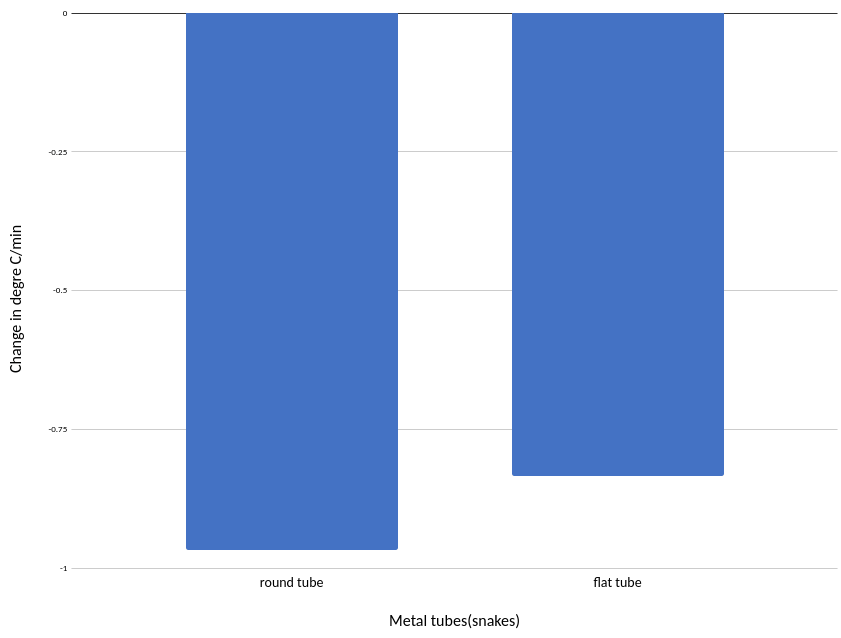
Figure 1. The rate of cooling in Celsius per minute between a flat and round metal tube. (n=3 per column, mean ± SE). On average, the round tube retained almost .2 degrees more than the flat tube per minute (p= 0.8).
Discussion and Conclusion: The results of the experiment supported the hypothesis that the short tube will lose more heat than the round tube. With a p value of 0.8, it means that the null hypothesis is rejected, and the hypothesis originally presented can be accepted. This can be explained through the flat snake having a larger amount of surface area to volume ratio (Karafit 2022). The round snake has more volume because of its round shape, and therefore has more to cool down than the flat snake, which has more cooling accessibility due to its form. The .2-degree difference proves this and further supports the hypothesis. This is important to understand the function of different features on organisms in different biomes. Further experiments may be conducted on the snake structure in cooler climates, as well as different postures such as straight out and coiled snakes. The optimal homeostatic temperature ranges between snake species (Giacometti et. al. 2021) so several tests can be done regarding different species within the same environment, for example a desert snake and a garden snake.
Literature Cited:
Danilo Giacometti, Katharine T. Yagi, Curtis R. Abney, Matthew P. Jung, and Glenn J. Tattersall. Staying warm is not always the norm: behavioural differences in thermoregulation of two snake species. Canadian Journal of Zoology. 99(11): 974-983. https://doi.org/10.1139/cjz- 2021-0135
Karafit S.J., Hurley K. (2022). BIOL 1441 Laboratory Manual (2nd ed.). Plymouth, MI. Hayden- McNeil, LLC.


Interesting study on thermoregulation and adaptations of snakes in the desert!
LikeLiked by 1 person